
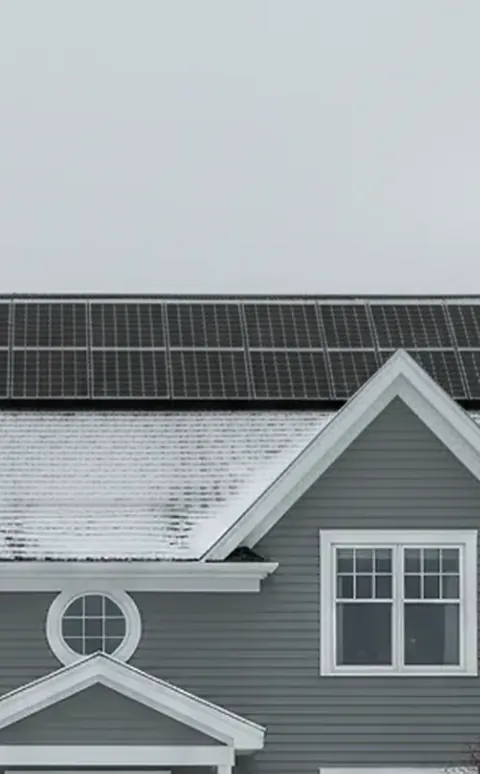
Make your own power, bank the surplus
A solar system sized to your home, connected under your utility's rules for home solar, installed by a licensed local installer.
Independent. Not affiliated with any utility or with the Government of Canada.
- Licensed local installers
- No door knocking, no pressure
- Independent advice
- Local installers, province by province
Your roof makes power. The grid keeps the surplus for you.
Each province and utility sets its own rules for connecting home solar, and your installer works within them. Nova Scotia is a useful example. Under NS Power's Self-Generating Option, a home can connect a solar system or battery of 27 kW or less behind its existing meter. When your panels produce more than you use, the surplus goes to the grid and is banked as kilowatt-hours. When they produce less, at night or on a grey January afternoon, those banked kilowatt-hours are used to offset what you draw.
Each January 1, any banked surplus is applied against the energy you were billed for during the year. Surplus beyond your annual use is not paid out, which is why a good installer sizes the system to your own consumption rather than to the size of your roof. Your monthly base charge still applies.
Source: NS Power, Self-Generating Option
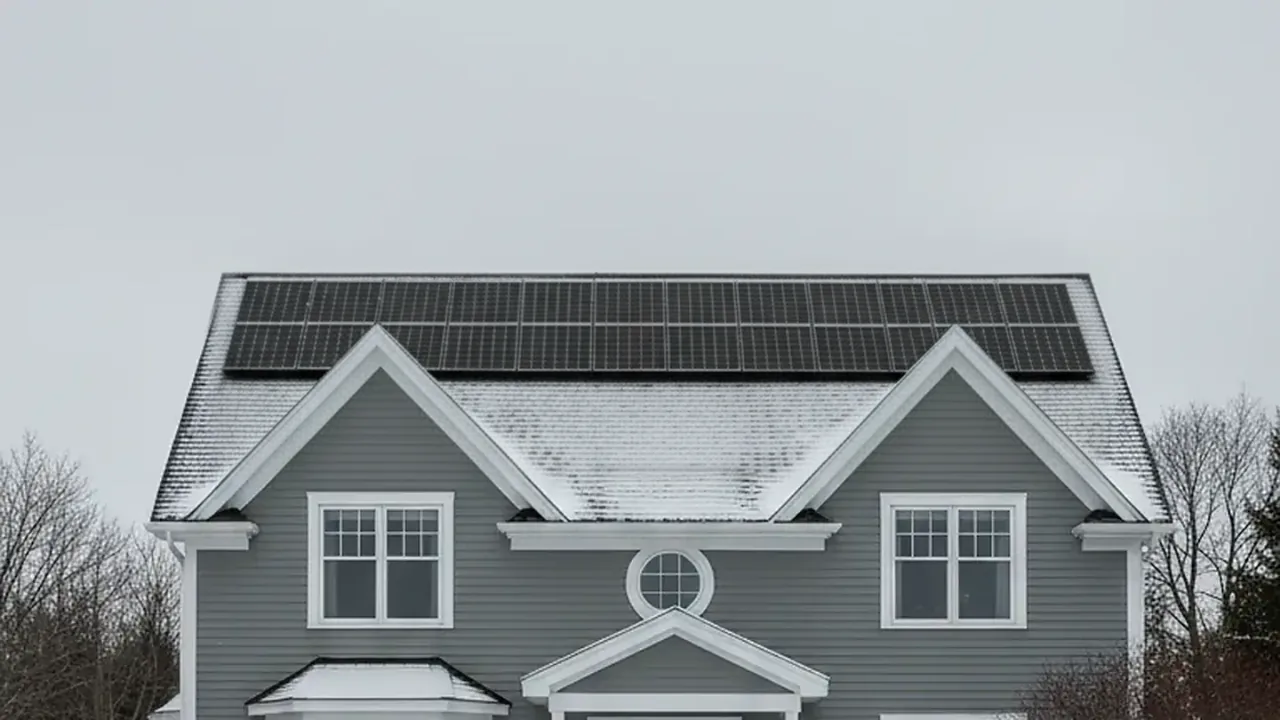
Four quick checks before you go further
No single factor rules solar in or out. These are the four things a licensed installer will look at first.
Your roof
South, east or west facing slopes with little shade work best. If your shingles are near the end of their life, plan the roof first so panels do not have to come off later.
Shingles with years of life leftYour electricity bill
Solar is sized on your yearly kilowatt-hours, not on dollars. Homes with steady year-round use, or a bill that has crept up, tend to get the most from it.
Have 12 months of usage handyHow you heat today
If you plan to switch from oil to a heat pump, your electricity use will rise. Tell your installer so the system is sized for the home you will have.
Planning a heat pump? Say soThe age of your home
Older homes may need an electrical panel upgrade to connect an inverter. It is common, and it is far better to find out during the assessment than on install day.
Panel capacity is checked firstReal numbers, from official sources
These are model estimates for unshaded panels. Your result depends on your province, shade, orientation, snow cover, equipment, your usage pattern and future rates. Surplus beyond your annual use is not paid out under the Self-Generating Option. Your installer will prepare a written estimate for your own roof.
Three steps, no obligation
From a quick quiz to a clear answer, without a salesperson at your door.
Take the 60-second quiz
Six quick questions about your home and your electricity bill. No address, no credit check.
Talk to a licensed local installer
They confirm your details, look at your roof and heating, and check which programs and incentives may apply to your home.
Decide at your own pace
You receive a clear recommendation and a written quote. You decide if and when to go ahead.
Free. Takes about a minute.
Panels only, or panels and a battery
A standard grid-connected system shuts down during an outage, for the safety of line crews. If keeping the fridge, the well pump or the heat pump running during a winter storm matters to you, a battery adds backup. It adds cost too, so we will tell you plainly whether it is worth it for your home.
- Panels only: the simplest way to lower the energy you buy
- Panels and battery: backup for the circuits you choose
- Battery ready: install later without redoing the system
What homeowners say about our installers
Google reviews of the licensed partner installer who does the work. Names and sentences are exactly as written; a skipped sentence is shown as …
5.0 on Google80 reviews of our partner installer
They made the entire process easy and stress-free. The installation itself was smooth and efficient, and they explained everything clearly along the way. … The panels look great with clean lines, hidden wiring, and are functioning perfectly.
They took the time to analyze our energy setup and explain what made sense for us without trying to upsell gear we didn't need. The installation itself was incredibly smooth, and the crew was polite, on time, and highly professional.
When selecting a company to install a solar panel system, we invited site visits, discussion and quotes from five companies. Only two of these companies took the time and effort to come and see the location, including the unique construction of our timber frame roof.
After a few years of looking into solar power for my home I finally decided to get it done. … They did the work without complaint and answered all my questions completely.
Very knowledgeable and easy to deal with. They took the time to explain the whole process to my wife and I and that enabled us to make an informed decision
Licensed local installers
Every installation is carried out by a licensed, insured installer based in your region who knows local roofs, local winters and your utility's connection process.
No pressure, no door knocking
Nobody shows up at your door. We only call the number you give us, when you ask us to. No countdown offers, no "sign today" pricing.
Independent advice
We are not a utility, a government program or a manufacturer. If solar or a heat pump does not make sense for your home, you will hear it from us.
Frequently asked questions
Straight answers to what homeowners ask us most.
Does solar work in a Canadian winter?
Yes, with realistic expectations. Panels produce much less in December and January than in June, and snow can cover them for a few days at a time. Over a full year, summer surplus banked under net metering, where your utility offers it, helps balance the winter months. Snow often slides off tilted panels; you should never climb on the roof to clear them.
How does net metering work in Nova Scotia?
Rules vary by province and utility. In Nova Scotia, new residential systems connect under NS Power's Self-Generating Option, for systems of 27 kW or less. Surplus is banked as kilowatt-hours and applied against energy you buy later in the year. On January 1, any remaining banked surplus is credited against energy billed that year; anything beyond your annual use is not paid out. Customers enrolled before April 22, 2022, stay on Legacy Net Metering. Source: NS Power.
Is there still a solar rebate in Nova Scotia?
Efficiency Nova Scotia's SolarHomes rebate closed to new homeowner applications on April 17, 2025. In the Halifax Regional Municipality, the Solar City program may offer financing repaid through your property, subject to eligibility. See our incentives page for the current list and official links. Sources: Efficiency NS, Halifax.
Will solar keep my lights on during an outage?
Not on its own. A grid-connected system without a battery shuts down when the grid goes down, so line crews can work safely. A battery is what provides backup.
How big a system do I need?
Big enough to offset your own yearly use, and no bigger, because surplus beyond your annual consumption is not paid out. Your installer will use 12 months of electricity usage, adjusted for any heat pump or electric vehicle you are planning.
Who handles the utility paperwork?
Your installer. Each utility has its own process. In Nova Scotia, for example, under the Self-Generating Option there is no separate application fee: the installer submits electrical plans to NS Power's inspection services, the work is inspected, and a two-way meter is installed at no cost if your home needs one. Source: NS Power.
Does solar make sense this far north?
It can. Natural Resources Canada estimates that a well-oriented system in Halifax, for example, produces roughly 930 to 1,070 kWh a year for each kilowatt installed, depending on tilt. Panels produce less in winter and more in summer, and where net metering is offered, such as NS Power's Self-Generating Option in Nova Scotia, you can bank summer surplus for later in the year. Shade and roof orientation matter more than latitude, which is why we start with an assessment.
See if your home qualifies
Take the 60-second quiz. A licensed local installer will call to confirm what applies to your home. Free, no obligation.
Check if your home qualifiesNo door-to-door sales. No pressure. If solar or a heat pump does not make sense for your home, we will tell you.