
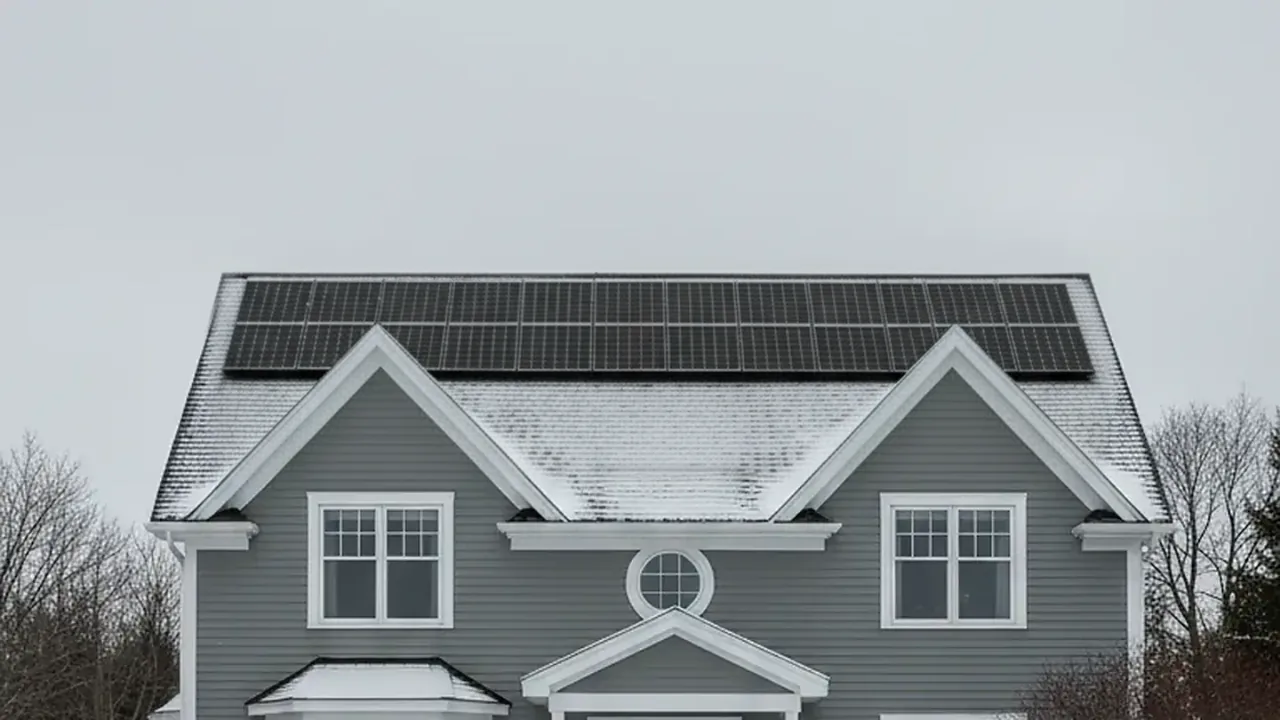
Many Canadian homeowners want both: a heat pump to tame winter heating costs and solar panels to generate their own power. If you can only do one this year, which should come first? There is a sensible default, and a few reasons to break it.
The default: reduce before you produce
A solar system is sized to how much electricity your home uses over a year. A heat pump changes that number. If you heat with electric baseboards today, a heat pump will usually lower the electricity you use for heating. If you heat with oil or wood, a heat pump will raise your electricity use while cutting your fuel bill.
Either way, installing the heat pump first means your installer can size the solar array for the home you will actually have, not the one you have now. Under many net metering rules, surplus beyond your yearly use is not paid out (that is the case under NS Power's Self-Generating Option in Nova Scotia, for example), so an oversized array can be money on the roof that does not come back. Your installer will check the rules of your own utility.
When solar first makes sense
- You already heat with a modern heat pump, so your usage is settled.
- Your roof is being replaced anyway. Coordinating the two jobs saves a second visit and avoids removing panels later.
- Your heating system is fairly new and works well, and your other electricity use is the bigger cost.
When both at once is the right call
If the budget allows, doing both together has real advantages. One site visit covers the roof, the electrical panel and the heating plan. Any panel upgrade is done once. And the solar array is sized with the heat pump's usage built in from day one.
Do not forget the paperwork order
Some rebate programs require an energy assessment before any work starts. In Nova Scotia, for example, if you hope to use Efficiency Nova Scotia programs for the heat pump, the Home Energy Assessment is designed for homes where renovations have not started yet. Check the rules in your province and book any required assessment before work begins, whichever project comes first.
Three questions that settle it
- How do you heat today? Baseboards, oil, wood or an older heat pump each point in a different direction.
- How old is your roof? If it needs replacing within a few years, deal with that before panels go on.
- Does your electrical panel have room? A heat pump and a solar inverter both need capacity. Finding out early avoids surprises.
An example: Nova Scotia
Heating is a big part of the energy picture in Nova Scotia: according to Statistics Canada data published by the province, electricity and fuel oil were the two largest sources of home heating energy in Nova Scotia in 2023, and about one home in four already used a heat pump as its main system. That is why the heat pump often wins the "first" question. Solar then offsets a more predictable electricity bill, with summer surplus banked for later in the year. The mix of heating fuels and the net metering rules differ in other provinces, so the same reasoning applies but the answer for your home may differ.
Every home is different, though. A shaded roof can make solar a poor fit regardless of timing, and a well-insulated home with a new heating system may get more from panels than from a heat pump. The point of the assessment is to find out which applies to you, including "neither, for now" if that is the honest answer.
Sources
- NS Power, Self-Generating Option
- Efficiency Nova Scotia, Heat pump programs and rebates
- Nova Scotia Department of Finance, Household heating (Statistics Canada data, 2023)
Programs and their rules change. Your installer will confirm what applies to your home at the time of your project.